


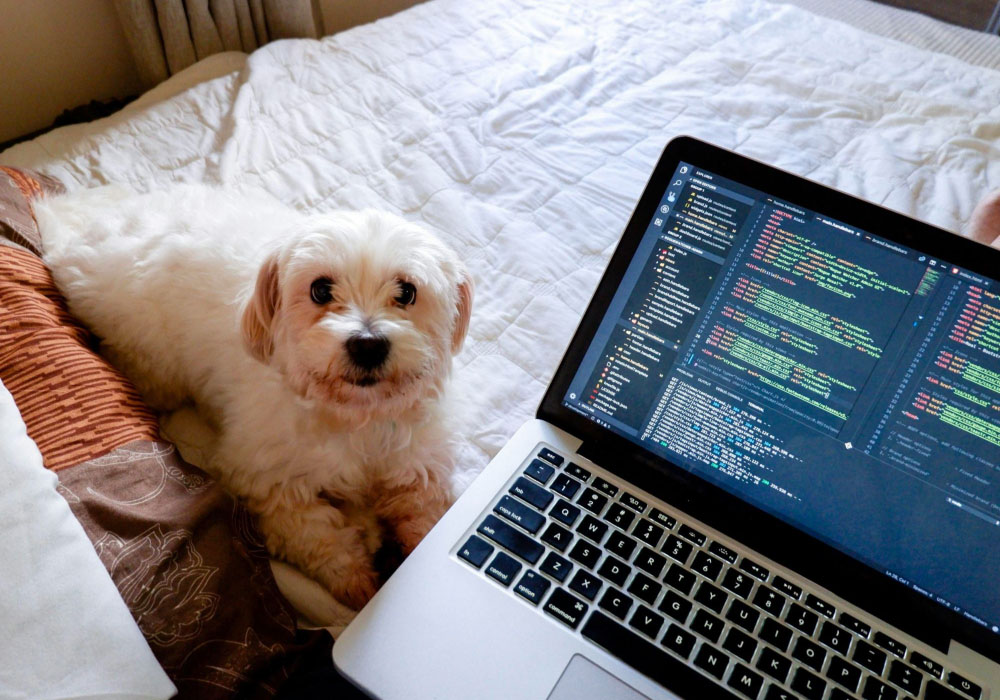
Vibe coding is a philosophy of programming that prioritizes mental flow, creative momentum, and personal well-being over rigid schedules and deadline-driven pressure. Rooted in flow state psychology, it encourages developers to design their environments, habits, and mindsets around deep focus and sustainable output. Whether you’re freelancing, building a side project, or navigating a demanding team environment, understanding vibe coding could genuinely reshape how you approach your craft.
There’s a particular kind of session most developers have experienced at least once: the one where the ideas won’t stop coming, the code practically writes itself, and two hours feel like twenty minutes. That state, where focus feels effortless, and the work is almost meditative, is at the heart of what the developer community has started calling “vibe coding.” It’s a term that’s been spreading through forums, podcasts, and developer communities since the early 2020s, and while it sounds casual, the concept behind it is grounded in real psychology and has practical implications for how you structure your working life.
At its core, vibe coding is a programming philosophy that places equal value on how you feel while working as well as on what you produce. It’s a deliberate shift away from grinding through code under pressure, toward building the kind of environment, mindset, and rhythm that allows for sustained creative output. For freelancers managing multiple clients, remote workers navigating the isolation of home offices, or indie developers building personal projects late into the night, this shift can be significant.
The origins of vibe coding
The concept draws heavily from a well-established idea in psychology: the flow state, first described by Hungarian-American psychologist Mihaly Csikszentmihalyi. Flow is characterized by deep immersion in a task, a loss of self-consciousness, and a sense of effortless engagement. Csikszentmihalyi’s research showed that people are at their most creative and productive when operating in this state, and that specific conditions, such as a clear goal, an appropriate level of challenge, and freedom from distraction, tend to support it.
Developers began connecting these ideas to their own craft during the early 2020s, a period when remote work became the norm, and many found themselves rethinking their routines from scratch. Conversations on developer forums and Slack communities started surfacing around the idea that coding could feel genuinely good, and that the misery of grinding through code while stressed wasn’t inevitable. The term “vibe coding” emerged from those conversations as a shorthand for intentionally pursuing that better experience.
A rough timeline of how the concept evolved:
- 2018: Flow theory gains wider attention in tech communities as conversations around developer well-being begin to grow
- 2020: Early mentions of “vibe coding” appear on developer forums, largely driven by remote work transitions
- 2022: Articles, newsletters, and community discussions begin treating vibe coding as a defined practice and lifestyle orientation
The core principles
Vibe coding isn’t a methodology with rules and deliverables. It’s closer to a set of values that shape how a developer structures their day, their workspace, and their relationship with the work itself. Several principles tend to appear consistently across the community conversations that have shaped it.
The goal isn’t to follow all of these rigidly, but to identify which resonate with your own working style and experiment from there:
- Flow over force: Prioritize conditions that support deep concentration rather than pushing through fatigue or distraction
- Environment as a tool: A well-considered physical and digital workspace, ergonomic setup, ambient sound, and minimal clutter genuinely affect output quality
- Curiosity over anxiety: Approaching problems with genuine interest rather than stress leads to more creative solutions
- Strategic rest: Short, deliberate breaks improve sustained energy and prevent the kind of cognitive depletion that makes code messy
- Shared energy: Collaboration, when done right, amplifies momentum rather than interrupting it
| Principle | What it looks like in practice |
|---|---|
| Flow | Blocking distractions, single-tasking, and protecting focus windows |
| Environment | Ergonomic chair, clean desk, ambient playlist, good lighting |
| Curiosity | Reframing bugs as puzzles rather than failures |
| Breaks | Pomodoro-style intervals, short walks, deliberate screen breaks |
| Collaboration | Async-first communication, energy-conscious pair programming |
How vibe coding differs from traditional approaches
Conventional software development culture has often been shaped by pressure: sprint deadlines, Jira boards, performance metrics, and the implicit expectation that long hours equal commitment. Vibe coding pushes back on this in a fairly direct way. Rather than treating the developer’s emotional state as irrelevant to output quality, it treats that state as one of the most important variables.
Some of the differences are practical, and others are philosophical:
- Mindset: Traditional environments often normalize stress as a feature; vibe coding treats stress as a signal that something needs adjusting
- Work style: Rigid sprint structures can conflict with natural creative rhythms; vibe coding favours adaptable, flow-based sessions
- Environment: Many traditional setups treat workspace comfort as a luxury; vibe coding treats it as a performance consideration
- Collaboration: Traditional team culture can skew solitary and competitive; vibe coding actively values shared creative energy
- Focus: Multitasking is common in conventional developer workflows; vibe coding advocates for deep single-task immersion
The shift isn’t about abandoning professionalism or ignoring deadlines. It’s about recognizing that the quality of your mental state directly affects the quality of your code, and designing your workflow accordingly.
Why developers love it: three real benefits
1. It unlocks better creative work
When developers work in a flow state, problem-solving changes character. Solutions arrive more intuitively, bugs become easier to trace, and the kind of lateral thinking that leads to elegant code becomes more accessible. This isn’t just subjective. Research into creative cognition consistently supports the idea that relaxed, focused attention produces better results than anxious, fragmented attention.
For developers working on open-ended problems, complex architecture decisions, or creative technical work, the difference is tangible:
| Aspect | Under pressure | In flow |
|---|---|---|
| Creativity | Interrupted, incremental | Continuous, more expansive |
| Problem-solving | Step-by-step, sometimes forced | Intuitive, associative |
| Focus quality | Variable, prone to context-switching | Steady, deeply immersive |
| Code quality | Functional but occasionally brittle | Cleaner, better considered |
2. It makes collaboration more human
One counterintuitive result of vibe coding in team settings is that it tends to improve communication. When the atmosphere is calmer, and developers feel less defensive about their work, code reviews become more constructive, feedback loops tighten, and creative brainstorming sessions actually generate ideas worth using.
Teams that consciously adopt vibe-oriented practices often report:
- Faster, more honest feedback cycles
- Improved psychological safety during reviews
- Stronger interpersonal trust across the team
- More generative brainstorming sessions
This matters especially in remote and distributed teams, where the absence of in-person cues can make collaboration feel transactional. A shared commitment to a calmer, more intentional working culture can partially compensate for that.
3. It reduces burnout meaningfully
Developer burnout is a documented and serious problem. Long, unbroken sessions of high-pressure coding exact a real cognitive and emotional toll, and the industry’s tendency to celebrate overwork as dedication makes it worse. Vibe coding addresses this by building recovery into the workflow rather than treating it as a reward for finishing.
Common burnout triggers and how a vibe coding approach responds to them:
| Burnout trigger | Vibe coding response |
|---|---|
| Uninterrupted multi-hour sessions | Regular breaks are built into the rhythm, not negotiated |
| Deadline-driven quality shortcuts | Focus on sustainable pace over pure speed |
| Cognitive monotony | Creative exploration and task variety woven in |
| Isolation | Connection with other developers as a regular practice |
Integrating vibe coding into your workflow
Choosing the right projects
Vibe coding works best when the work itself has some room to breathe. That doesn’t mean avoiding professional work entirely, but it does mean being thoughtful about when to apply it. Projects with extreme rigidity, fully specified requirements, and zero tolerance for exploration are harder to vibe-code. Projects with creative latitude are a natural fit.
Good candidates tend to share a few characteristics:
- Exploratory or prototype work where the goal is to discover something, not just deliver it
- Creative or interactive development, including animations, design systems, and unconventional interfaces
- Personal or open-source projects where you have genuine ownership over approach
- Technology exploration, where you’re learning something new, and experimentation, is the point
A simple filter to apply when assessing fit:
| Project characteristic | Vibe coding fit | Why |
|---|---|---|
| Flexible timeline | Strong | Allows iteration without pressure |
| Creative scope | Strong | Rewards experimentation |
| Rigid specifications | Weaker | Limits the range of exploration |
| Team-based | Moderate | Depends heavily on team communication culture |
Tools and techniques worth trying
Getting started doesn’t require a dramatic overhaul of your setup. A few targeted adjustments to your environment and habits can make a significant difference. The goal is to reduce friction, minimize distraction, and build a physical and digital space that actually supports concentration.
On the tools side, these tend to work well:
- Minimalist editors like VS Code or Sublime Text with clean, low-distraction themes
- Task managers like Todoist or Notion for capturing ideas without letting them break your focus
- Ambient audio apps such as Brain.fm, Endel, or a simple lo-fi playlist for background noise that aids concentration rather than competing with it
- Version control hygiene through Git, so you can experiment freely without fear of losing progress
A practical session structure that many developers find useful:
| Time block | Activity | Suggested tool |
|---|---|---|
| 0–5 min | Set intention and plan small goals | Todoist or a notebook |
| 5–30 min | Focused coding, single task | VS Code with Pomodoro timer |
| 30–35 min | Short break, step away from the screen | Walk, stretch, or music |
| Repeat | Continue in cycles | Adjust interval length as needed |
The Pomodoro technique, with 25-minute focused intervals and short breaks, pairs particularly well with vibe coding’s emphasis on sustainable rhythm over marathon sessions. Shorter intervals also make it easier to notice when your concentration is fading, which is information worth having.
Handling the challenges
Vibe coding does come with genuine trade-offs. The biggest is that flow states don’t always arrive on demand, and a style of working that depends on them can feel unreliable in professional settings where predictability matters. There’s also the challenge of aligning this approach with colleagues or clients who operate differently.
Common friction points and practical responses:
| Challenge | Approach |
|---|---|
| Difficulty reaching flow on demand | Use a consistent pre-session ritual to signal the transition |
| Deadline conflicts | Break work into micro-goals; build in buffer time deliberately |
| Team misalignment | Be transparent about your working style; advocate for async norms |
| Distraction and drift | Use distraction-blocking tools and protect your deep work windows |
The key insight is that vibe coding is a practice, not a personality type. Like any skill, it develops with deliberate attention and improves over time.
Where does vibe coding actually fit in your workflow?
A question worth sitting with honestly is whether your current projects and professional context can accommodate this kind of approach. Not every codebase, team, or client relationship will support it equally, and that’s fine. The value isn’t in applying vibe coding everywhere, but in recognizing where it can legitimately improve your experience and output, and creating space for it there.
For freelancers, this might mean structuring your own schedule around natural energy peaks. For remote developers, it might mean advocating for async communication norms that protect deep work time. For those working on side projects, it might simply mean being more intentional about the environment and headspace you bring to that evening session.
Finding your rhythm and making it stick
Ultimately, what makes vibe coding compelling is that it treats developers as whole people rather than code-output machines. The idea that your emotional state, your physical environment, and the quality of your concentration are all legitimate professional concerns, not distractions from the real work, is both sensible and overdue in an industry that has historically celebrated burnout as proof of commitment.
The practical takeaway is straightforward: you don’t need to overhaul your workflow overnight. Start by identifying one or two projects where you have creative latitude, experiment with a few environmental and structural changes, and pay attention to how your experience shifts. The Pomodoro technique, a cleaner workspace, a better playlist, and permission to explore without pressure are all low-cost interventions that can produce noticeable results.
The deeper shift is attitudinal. When you start treating your mental state as a meaningful input to the quality of your work, and designing your day accordingly, you begin to develop a more sustainable and genuinely enjoyable relationship with programming. That’s worth pursuing regardless of what you call it.